
Sep 1, 2026Buying Guides
How to Choose the Right Tinplate Thickness for Your Product
A practical guide to balancing durability, weight, and production cost for custom tin packaging.
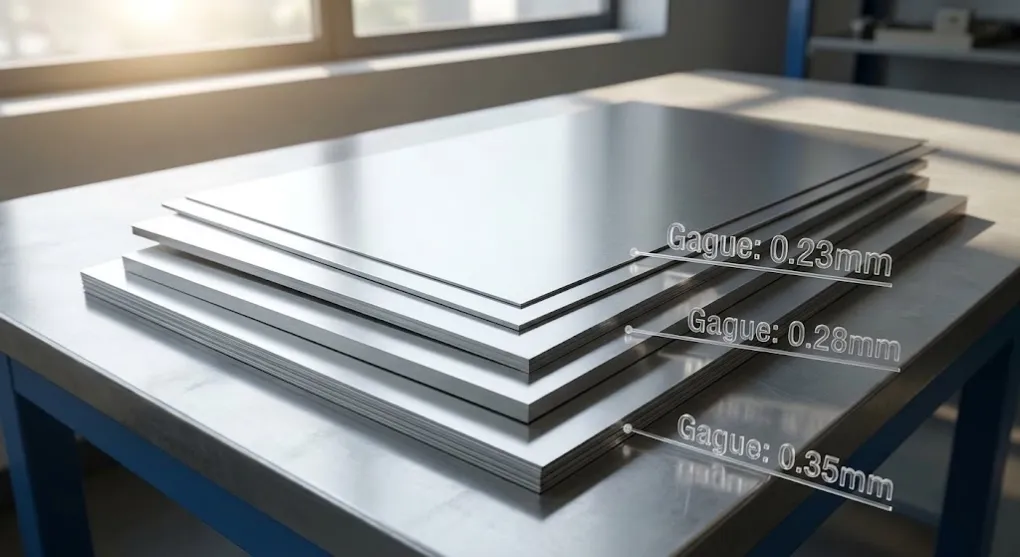
When engineering custom metal tins, selecting the correct tinplate thickness—commonly ranging from 0.20 mm to 0.35 mm—is one of the most critical decisions in the packaging design process. The gauge of your tinplate directly affects structural integrity, shipping performance, branding acoustics (the tactile "snap" of a lid), and total manufacturing costs.
1. Common Tinplate Gauges and Their Applications
- 0.20 mm – 0.23 mm (Lightweight & Economical)
- Best for: High-volume, small-format tins such as mint tins, tea sachets, small cosmetics, and promotional giveaways.
- Advantage: Lower raw material costs and lighter shipping weight without compromising basic protective capabilities.
- 0.23 mm – 0.28 mm (Industry Standard)
- Best for: Cookie tins, confectionery packaging, premium tea/coffee canisters, and gift sets.
- Advantage: Excellent balance between rigidity and cost-effectiveness. It offers strong resistance to denting during transit while remaining easy to stamp and emboss.
- 0.28 mm – 0.35 mm (Heavy-Duty & Luxury)
- Best for: Spirits, luxury watch packaging, large biscuit tins, and reusable premium keepsakes.
- Advantage: Superior structural strength, premium tactile weight, and maximum resistance to deformation under heavy stacking.
2. Key Factors Influencing Thickness Selection
- Tin Box Size & Shape: Larger surfaces require thicker tinplate to prevent wall bowing or flexing. If your design features large flat panels, opting for a 0.25 mm gauge or adding structural ribs/embossing can prevent sagging.
- Shipping & Distribution: If your products undergo rough international logistics or direct-to-consumer parcel shipping, a slightly thicker gauge significantly reduces transit damage rates.
- Lid Closure Mechanism: Hinged lids, slip lids, and seamless push-up bases each exert different stress levels on the metal. Thicker tinplate ensures seamless mechanical operation over repeated uses.
3. How to Optimize Cost vs. Quality
Working closely with your custom tin manufacturer early in the mold-conception stage allows you to test prototypes at different gauges. In many cases, adding structural embossing or structural beads to a thinner tinplate can achieve the same rigidity as a thicker gauge—saving both material costs and freight expenses.
Contact our engineering team today to request material samples and find the ideal tinplate specifications for your upcoming custom packaging project.